

GIUSEPPE GORNI
1894 – 1975
Sculptor, artist, and witness to twentieth-century Italy – born in Nuvolato di Quistello, custodian of a humanist vision forged between war and beauty.
THE ORIGINS
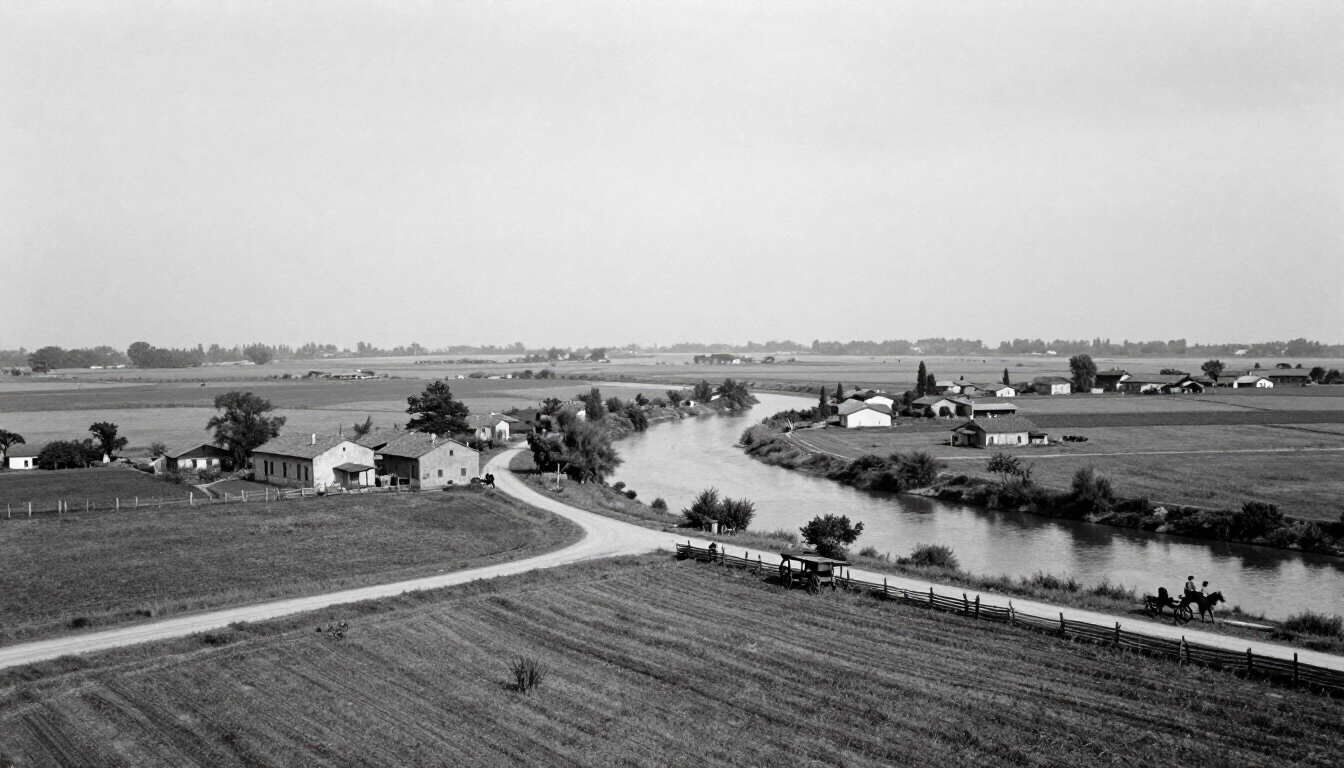
Giuseppe Gorni was born on March 27, 1894, in Nuvolato di Quistello, a small village in the province of Mantua nestled in the Po Valley of the Oltrepo Mantovano. The agricultural landscape of these lands—the flat horizon stretching into the sky, the grazing light on the Po River, the slow seasons of the northern Italian countryside—formed the sensorial backdrop of his childhood. That profound connection with the earth's texture, with the rhythms and forms of the Po Valley's nature, would later transform, over time, into an artistic vocation rooted in the tangible and the concrete, finding expression in the plasticity of sculpture.
Gorni's cultural education took place in a region rich in artistic heritage: Mantua had nurtured Renaissance masters and preserved a figurative tradition of extraordinary intensity. In this context, the first signs of his artistic vocation emerged in adolescence, fueled by his exposure to a visual heritage of rare quality. His origins in a modest provincial community gave his sensibility an authenticity and grounding that would distinguish his work throughout his career: an art never divorced from lived experience, never ornamental, always profoundly human.
THE GREAT WAR AND THE EDUCATION
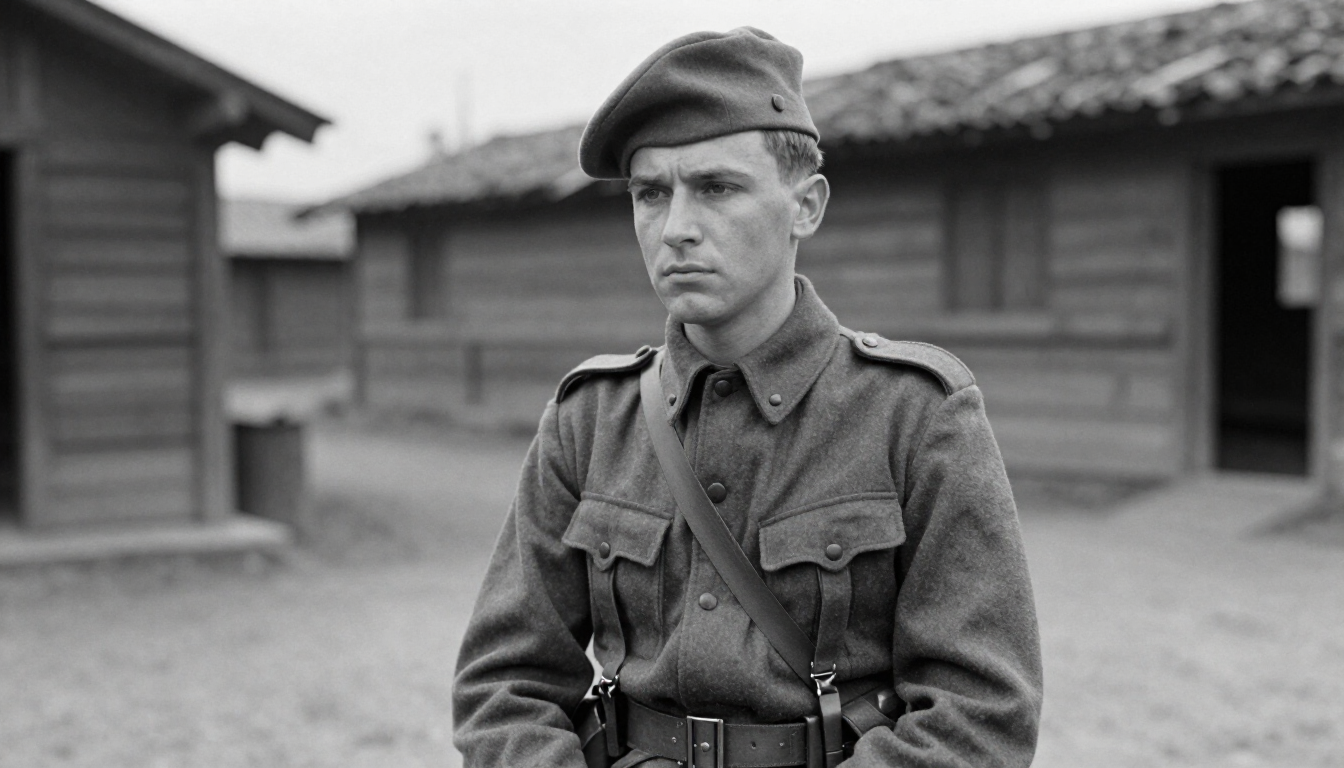
The outbreak of the First World War abruptly interrupted Giuseppe Gorni's early artistic aspirations. Like many young men of his generation, he was called to arms and experienced the drama of the conflict firsthand. Captured by the enemy, Gorni spent time as a prisoner of war: months of deprivation, forced isolation, and distance from his homeland. The condition of a prisoner—the imposed silence, the loss of freedom, the coexistence with suffering and death—would, paradoxically, prove to be a moment of extraordinary inner intensity.
In the silence of his imprisonment, Gorni began to draw, to observe the world around him with renewed attention, to develop the introspective quality that would later define his sculpture. The experience of war and its human devastation forged in him a humanist and compassionate vision of art: an art rooted in the human figure, in the dignity of the individual, in the weight of lived experience. For him, sculpture would become the language with which to restore to inert matter the memory of the human body and its history.
Upon returning to Italy, Gorni found himself faced with a profoundly changed country. The cultural climate of the 1920s was marked by postwar tensions, political unrest, and a lively artistic pursuit that sought to come to terms with modernity. During this transitional period, Gorni matured his decision to pursue formal academic training, aware that the language of sculpture required rigorous technical mastery. The war had shaped his artistic identity; the Academy would give form and tools to that vision.
ACADEMIC EDUCATION
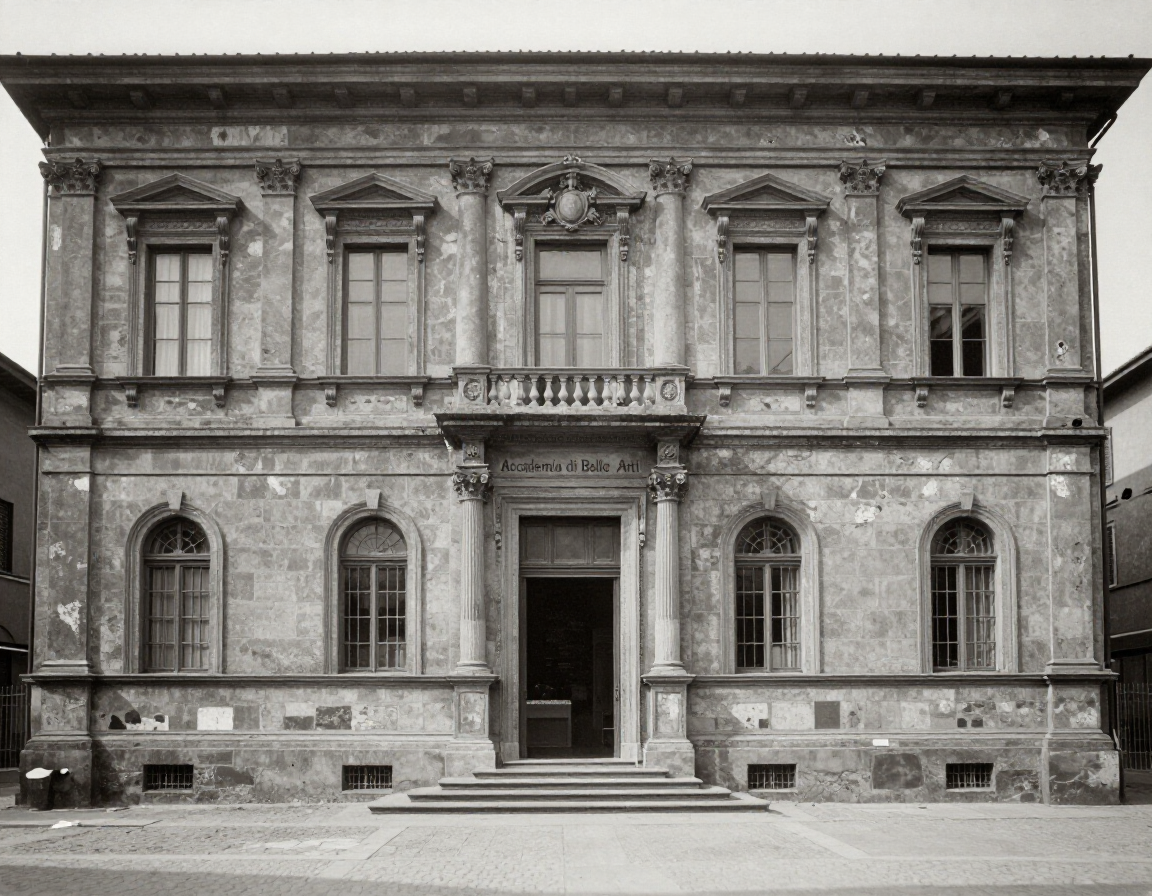
Enrolling in the Academy of Fine Arts in Bologna marked a turning point in Giuseppe Gorni's life. Founded in 1762 by order of Pope Clement XIII, the Academy was one of Italy's most prestigious institutions for artistic education, the custodian of a tradition of excellence in figurative art that dated back to the Carraccis and continued into the twentieth century. For a young man from the Mantua plain, entering the doors of that institution meant entering into contact with centuries of accumulated technical and visual knowledge, and with a community of artists and masters capable of transmitting not only the practice but the culture of artmaking.
At the Academy, Gorni mastered the fundamental disciplines of sculpture: clay and plaster modeling, stone carving, bronze casting, and the analytical study of the human figure. The rigor of his academic training—life drawing, artistic anatomy, and the copying of classical models—provided him with the technical foundations upon which he would build his entire production. Sculpture, with its three-dimensional physicality, the resistance of the material, and the challenge of volume, became his medium of choice: a space in which form emerged from the struggle with the material.
Gorni's formative years in Bologna were also the years in which he engaged with the artistic movements of his time. His sculpture echoes the figurative realism of the late nineteenth century, the influence of Rodin on his exploration of psychological depth and the expressive power of modeled surfaces, and the tension between academic tradition and the pressures of emerging modernism. Gorni did not mimic the avant-garde movements: he transcended them with critical autonomy, developing a personal language in which expressive radicality never came at the expense of human recognizability.
Upon completing his studies, Gorni was a trained sculptor, equipped with a confident technique and a recognizable artistic voice. His early works already reveal the traits that would characterize his mature production: formal solidity, the humanistic weight of the figure, compositional clarity that never sacrifices emotional intensity. These were works that spoke of real men and women, their work, their dignity, their toil—sculpture rooted in experience and nourished by memory.
ARTISTIC CAREER
The 1920s marked Giuseppe Gorni's debut as a professional sculptor. His first commissions and exhibitions in Lombardy and Mantua revealed him as an artist capable of combining technical mastery and emotional engagement. The cultural climate of Italy between the two world wars was lively and contradictory: on the one hand, the regime's monumental rhetoric sought celebratory and heroic sculpture; on the other, a more intimate and humanist figurative tradition survived. Gorni navigated this space intelligently, maintaining his expressive autonomy without succumbing to the pressures of state rhetoric.
Over the following decades, Gorni received significant commissions in both the public and private sectors: commemorative monuments, works for churches and places of worship, architectural sculptures, and pieces for private collections. His presence extended across northern Italy—from the Po Valley to the Alpine cities of Piedmont—establishing his reputation as one of the most coherent and recognizable figurative sculptors of his time. His public works, in particular, demonstrate his ability to integrate sculpture into civic space without imposing, but rather in dialogue with the place and its memory.
Participation in regional and national exhibitions allowed Gorni to build a network of relationships with other artists, critics, and patrons in the 20th-century Italian art world. His works were well received by critics, who appreciated the solidity of his training and the continuity of his research: a sculpture that did not follow trends but persistently explored its theme. Awards and recognitions confirmed his position in the national art scene, while always maintaining a discreet profile, far from the high-society circles of the metropolitan avant-garde.
In the 1950s and 1960s, Gorni's sculpture reached its full maturity. His humanist vision deepened and refined: his figures shed all concessions to anecdote, taking on an archetypal, almost emblematic weight. While the Italian and European art world was gripped by the debate between figuration and abstraction, between neorealism and avant-garde, Gorni remained faithful to the human figure as the measure and center of artistic experience, without being anachronistic. His sculpture interrogated the human condition with a silent gravity that few of his contemporaries could match.
In the final decades of his life, Gorni's production took on a more intimate and collected character. The works of this period are often small in size, yet dense with meaning: portraits, reclining figures, studies of hands and faces that condense a lifetime of observation into small volumes. It was the art of a man who had lived through the entire twentieth century—the war, modernity, the radical transformations of Italian society—and who continued to believe that sculpture could be an act of healing for humanity. His artistic life was drawing to a close with the same integrity with which it had begun.
HERITAGE AND MEMORY
Giuseppe Gorni's final years were spent in Domodossola, a city in the Verbano-Cusio-Ossola region at the foot of the Piedmont Alps. Even in his advanced years, his creative commitment continued: the works of this period testify to an increasingly intense concentration, a focus on the essential. He died in 1975 – a lifetime devoted to art, to the search for form as an expression of the human condition. With his passing, Italy lost one of its most tenacious and authentic figurative sculptors of the twentieth century.
The community of Nuvolato di Quistello, the land where he was born and which shaped his sensibility, wanted to honor Gorni's memory by founding the Giuseppe Gorni Diffused Museum: a "diffused" museum in the truest sense of the word, spanning multiple sites throughout the region, placing his works and his memory within the landscape that shaped him. The project is supported by the Municipality of Quistello, the Mantua Museum System, and the Oltrepo Mantovano, who together ensure the museum's vitality as a living cultural institution, capable of transmitting to new generations the value of an artistic legacy rooted in the region.
Visiting the Giuseppe Gorni Diffused Museum means taking a journey through the history of a man and a region: wandering through the museum's halls and spaces, discovering the works in places where they interact with the landscape and local memory, and letting yourself be guided by a sculpture that still speaks with a clear, human voice. We invite you to explore the museum, learn about the works on display, and discover the Oltrepo Mantovano region that nourished Gorni's vision.